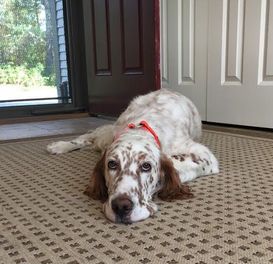
We specialize in in-home training because it is best for your pet.Your dog spends most of his time at home. Home visits enable us to see how he behaves and work with him in his comfort zone with the least distractions.
In addition, home visits can be more efficient than going to a training center. Many dogs become stressed getting in a car and traveling to a strange place or being around other dogs. This can mean that the start of a training session must be spent overcoming that stress. |
We use Positive Training Methods, because reinforcement-based training is the only science-based system proven to work with most dogs.
Through this system, we teach your dog what we want him to do, and reward him for doing it. Punishment based systems gain compliance by teaching the dog to avoid behavior for fear of repercussions. This can lead to greater fear in the dog and developing a poor relationship with you.
|
Here is an article from PetMD
about why positive training is most effective:
How to Train a Dog with Positive Reinforcement
Aggression Help for Young and Old
Does your dog guard food bowls, toys, furniture, people or other things? Does he bark, growl, or lunge at visitors, or demonstrate other aggressive displays? People are rightly concerned about this behavior, and often worry that a bite could lead to serious harm and troublesome situations with guests or neighbors. Working with your dog, we resolve the reasons for his aggression and change his response. Instead of seeing a visitor as a threat, he will learn that visitors are either nothing to worry about, or, even better, they are a source of fun. Your pet will move away from an aggressive response to a neutral or happy response.
Anxiety and Stress Relief
Some dogs have a nervous temperament and are fearful of certain triggers. It could be that they had a bad experience in the past and have not resolved that issue. Perhaps they can’t stand being left alone (separation anxiety) or startle when the dishwasher beeps, or the front door slams. This anxiety can lead to things like uncontrolled pee-ing, howling, or trying to flee from whatever is bothering them in a way that could be a danger to them. Dogs don’t do this because they are bad or angry, they are feeling stress and this is their reaction. We work with these pets to alleviate their issues, so they can be comfortable in these situations.
Some owners ask about the use of anti-anxiety medication. They may have heard about it, or their dog may already be using it. Jill has worked with many dogs who have anxiety issues, and can help explain what these medications can or won't do. Since Jill is not a veterinarian, these decisions should be made with your vet.
Puppy Basics
There’s nothing like adding a new puppy to your family. But they do need to learn how to be comfortable in your world. When puppies start out, their brains are like sponges. This is called the Sensitive Period of Development (up to 12-14 weeks of age). During this time it is easiest to acclimatize them to things in your wider world. If you want to be able to go places with your dog, he needs to learn to ride in the car. Like to go to an outdoor restaurant with your pup? Then he has to learn how to be comfortable in that setting. When you visit friends, or have people over, your puppy needs to learn that none of these things are a threat. Since many people don’t get their puppy till it's 8 - 10 weeks old, the time is short to make the most of this opportunity.
Of course, they do keep learning, and all puppies (up to 6 months) need to learn the basics like housebreaking and not to nip, and to obey simple commands such as sit, and not to jump up on people. It’s best to start puppy training as early as possible, when it is easiest to teach them and so they don’t develop undesirable behaviors.
Introducing a New Dog to your Family
Many people adopt dogs with unknown backgrounds. Rescue dogs often fall into this category. Since all of Jill’s dogs have been adopted, she has personal and professional experience with this situation. We can meet with you and your new pet and assess his body language to see where he is or is not comfortable. We can also determine what training he has had in the past, if any. Does he know basic commands or need help with this? Is he bonding successfully with the family, or is he uncomfortable? These are some of the areas we look into and determine the best training plan for him.
Manners and Skills Training for Adolescent Dogs
It’s so nice to have a well-behaved dog, one who is good at home and is a welcome visitor in other places. We work with your pet on things like sit, loose-leash walking, leave it, come-when-called and other skills. Even if they learned them as a puppy, adolescents (6 – 18 months) often need to relearn these behaviors once they start to mature. Working on these issues now avoids worsening problems in the future.
Keeping Your Dog Engaged and Happy
Dogs are naturally bright and curious. Without the intervention of mankind, they would run around all day, sniffing out other dogs in their environment, chasing rabbits and squirrels and having a fine time! Now our dogs are expected to live as we live. Many dogs spend most of the day on their own, indoors with little mental or physical stimulation. They may get a walk a few times a day on a leash, but their world can seem pretty small to them. It’s no wonder that they can get bored and may chew on things, or develop unwanted habits. (Sometimes, owners may misinterpret boredom and the resulting damage as separation anxiety, but it is distinctively different. We can help with that too.) We can help by assessing your dog’s needs and recommending a wide assortment of activities and toys to keep him tuned in and happy.
Dogs and Children
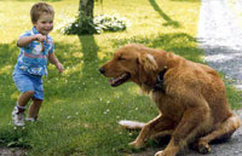
While kids love dogs in their own way, dogs don't always return their affection. Why? Dogs have a very different set of social rules than people. Dogs are sensitive and can become afraid and react accordingly. While a child may love to climb on his dog, the dog may feel this is annoying and nip or growl. Kids should be taught to respect dogs, and most dogs can be taught to tolerate and even like children, but it's not an automatic relationship. We can help.
Photo Credits, from the top: 1,4. Katie Ziegler, Positive Focus Photography, Stowe, VT. 2. Ryna Studio / Unsplash 3.Daria Trofimova / Unsplash 5. Vladimir Istomin / Unsplash 6. No Revisions / Unsplash 7. Jordan Heinz / Unsplash